
Ebola Outbreak in Congo Intensifies as Cases Near 800 and Health System Struggles
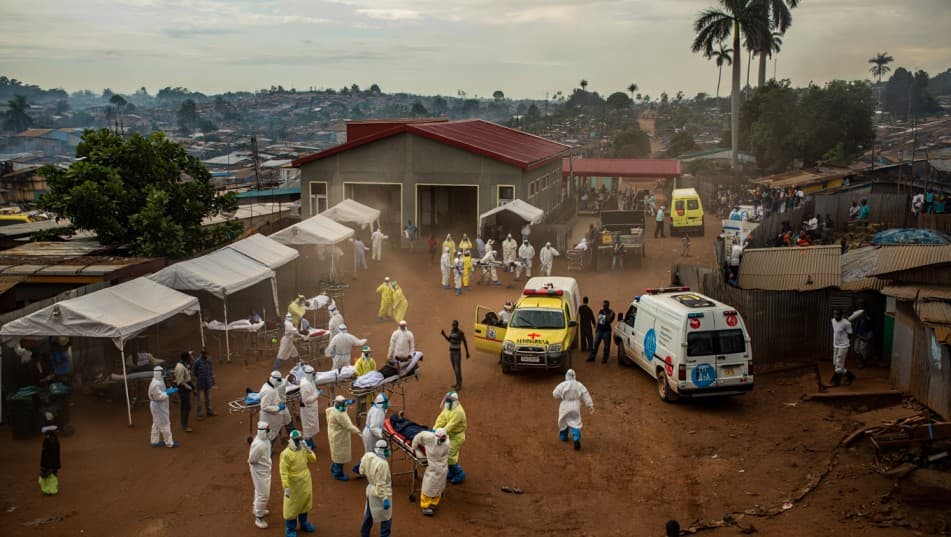
Medical teams continue efforts to contain the Ebola outbreak amid resource shortages and community resistance in eastern Congo.
Executive Summary
The Ebola outbreak in the Democratic Republic of Congo has escalated significantly, with 782 confirmed infections and 181 confirmed deaths reported as of June 13. Health authorities face mounting challenges in containing the disease due to limited resources, conflict-related disruptions, inadequate contact tracing, and resistance from some local communities.
Key Takeaways
- ✓The Ebola outbreak has reached 782 confirmed cases and 181 deaths.
- ✓Bunia remains the most affected city with 212 confirmed infections.
- ✓Only 56% of contacts have been traced, complicating containment efforts.
- ✓Healthcare workers face severe shortages of protective equipment and resources.
- ✓Poverty and conflict continue to undermine response operations.
- ✓International aid agencies have increased support but resources remain limited.
- ✓The outbreak could affect Congo's economy and mining sector.
- ✓Global health authorities continue to monitor the risk of wider spread.
Ebola Outbreak in Congo Intensifies as Cases Near 800 and Health System Struggles
The Ebola outbreak in the Democratic Republic of Congo (DRC) has reached a critical stage, placing immense pressure on an already fragile healthcare system. With 782 confirmed cases and 181 confirmed deaths reported as of June 13, health officials are racing to contain the virus before it spreads further across the region.
The epicenter of the outbreak remains Ituri province in eastern Congo, where years of conflict, displacement, and poverty have severely weakened healthcare infrastructure. The city of Bunia has emerged as the most affected urban center, accounting for 212 confirmed cases, making it a focal point of containment efforts.
Despite ongoing international assistance and emergency response measures, health workers continue to face significant operational and security challenges.
The Current Scale of the Outbreak
The latest figures highlight the seriousness of the crisis.
Key Statistics
| Metric | Figure |
|---|---|
| Confirmed Ebola Cases | 782 |
| Confirmed Deaths | 181 |
| Cases in Bunia | 212 |
| Contact Tracing Coverage | 56% |
| Provinces with Active Transmission | 3 |
Public health experts warn that the true scale of the outbreak could be larger due to difficulties identifying and monitoring all potential contacts.
Why Bunia Has Become the Epicenter
Bunia, the capital of Ituri province, has recorded the highest number of confirmed Ebola infections.
Several factors contribute to the city's vulnerability:
- High population density
- Frequent population movement
- Limited healthcare resources
- Ongoing security concerns
- Delayed reporting of symptoms
The city's role as a regional commercial hub also increases the risk of wider transmission if containment efforts are not successful.
Contact Tracing Remains a Major Challenge
One of the most critical tools in controlling Ebola outbreaks is contact tracing.
Health officials attempt to identify everyone who has come into contact with infected individuals and monitor them for symptoms.
However, only 56% of identified contacts have been successfully traced across affected provinces.
This means a significant portion of potentially exposed individuals remain outside official monitoring systems.
Challenges include:
- Population displacement
- Lack of reliable communication networks
- Security risks in conflict zones
- Community mistrust
- Limited healthcare personnel
Without comprehensive contact tracing, containing the virus becomes significantly more difficult.
Healthcare Workers on the Front Line
Medical professionals continue to bear the brunt of the crisis.
Many healthcare workers are operating under extremely difficult conditions.
Reports indicate shortages of:
- Personal protective equipment (PPE)
- Medical supplies
- Isolation facilities
- Laboratory testing capacity
- Trained personnel
Several healthcare workers have reportedly died while responding to the outbreak, underscoring the dangerous conditions facing frontline responders.
The shortage of protective equipment remains one of the most urgent concerns for hospitals and treatment centers.
Poverty Complicates the Response
The Democratic Republic of Congo remains one of the world's poorest nations.
More than 85% of the population survives on approximately $3 per day.
Economic hardship directly impacts outbreak control efforts because:
- Families may delay seeking treatment
- Transportation to health facilities is often unaffordable
- Malnutrition weakens overall health resilience
- Public awareness campaigns face resource constraints
The intersection of poverty and disease creates conditions that allow outbreaks to spread more rapidly.
Impact of Decades of Conflict
Eastern Congo has endured decades of armed conflict, political instability, and humanitarian crises.
These long-standing challenges have severely weakened public institutions and healthcare infrastructure.
Consequences include:
- Damaged medical facilities
- Shortages of healthcare professionals
- Insecure transportation routes
- Population displacement
- Limited government capacity
Public health emergencies become significantly harder to manage in such environments.
Community Resistance Slows Progress
Health authorities report that community resistance continues to hinder containment efforts.
Although many residents cooperate with healthcare teams, some remain skeptical of medical interventions.
Factors contributing to resistance include:
- Misinformation
- Fear of isolation centers
- Distrust of authorities
- Cultural practices surrounding illness and burial
Community volunteers and local leaders play a crucial role in building trust and encouraging participation in prevention measures.
International Aid Efforts Intensify
Global health organizations and humanitarian agencies have expanded support for the outbreak response.
Aid efforts include:
- Airlifting medical supplies
- Deploying healthcare personnel
- Providing protective equipment
- Supporting laboratory testing
- Conducting public awareness campaigns
Hundreds of metric tons of medicines and equipment have been delivered to affected areas.
However, aid workers emphasize that current resources remain insufficient relative to the scale of the outbreak.
Economic Impact on Congo
The outbreak is expected to have significant economic consequences.
Healthcare Spending Pressures
The government and international donors face rising costs associated with treatment, surveillance, vaccination programs, and emergency response operations.
Mining Sector Risks
The Democratic Republic of Congo is a major producer of:
- Cobalt
- Copper
- Gold
- Other strategic minerals
A prolonged outbreak could disrupt economic activity, logistics, and labor availability in affected regions.
Investor Concerns
Health emergencies often increase perceptions of country risk, potentially affecting foreign investment and economic development initiatives.
Global Health Implications
Ebola outbreaks attract international attention because of the virus's high fatality rate and potential for cross-border transmission.
Although Ebola is not easily transmitted through casual contact, international travel and population movement can create opportunities for wider spread if containment measures fail.
Global health agencies continue monitoring the situation closely to prevent regional and international escalation.
Why India Is Monitoring the Situation
The outbreak carries relevance for India for several reasons.
Public Health Preparedness
India remains vigilant regarding infectious disease outbreaks worldwide due to increasing international travel and global connectivity.
Diaspora and Travel Links
Indian citizens working or traveling in African countries may face increased health risks if the outbreak expands geographically.
Trade and Economic Relations
India maintains economic relationships with several African nations, including the Democratic Republic of Congo, particularly in mining and resource sectors.
Any disruption could affect supply chains and commercial activity.
Healthcare Surveillance
Indian authorities may strengthen monitoring protocols at airports and ports to reduce potential risks associated with international travel.
What Happens Next?
Health officials expect case numbers to continue rising in the near term as surveillance efforts improve and additional infections are identified.
Key developments to monitor include:
- Daily case growth rates
- Expansion of contact tracing coverage
- Availability of medical supplies
- Vaccination efforts
- Community engagement initiatives
- International funding commitments
The effectiveness of these measures will determine whether the outbreak can be contained before spreading further.
Outlook
The Ebola outbreak in eastern Congo remains a serious public health emergency. With hundreds of confirmed cases, significant mortality, and major operational challenges, health authorities face a difficult battle to contain the virus.
The combination of poverty, conflict, limited healthcare infrastructure, and community resistance creates a uniquely challenging environment for disease control. Continued international support, improved contact tracing, and stronger community engagement will be essential to slowing transmission and preventing a broader humanitarian crisis.
As global health agencies continue their response, the world will be closely watching whether containment efforts can gain momentum in the weeks ahead.
Vihaan
Global Health CorrespondentCredentials: MA in Economics, NISM Certified
Vihaan covers domestic indices, banking sector developments, and monetary policy news. He has over 8 years of corporate finance journalism experience.
