
Trump Ends Russian Crude Waiver, Raising Questions Over India's Energy Security
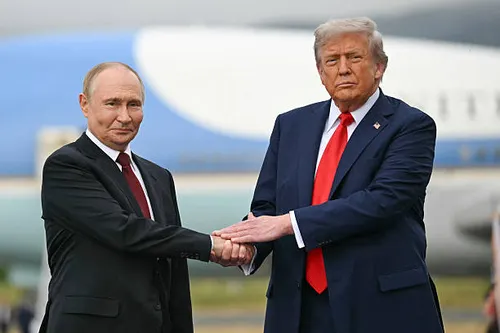
The expiration of the Russian crude waiver could reshape global energy trade flows and India's import strategy.
Executive Summary
The expiration of the US sanctions waiver covering Russian seaborne crude oil has renewed attention on Trump's sanctions on Russian crude oil and their potential impact on global energy markets. The move could pave the way for the reinstatement of sanctions on major Russian energy companies such as Rosneft and Lukoil. While India has relied heavily on discounted Russian crude since geopolitical tensions disrupted traditional energy flows, improving Middle Eastern supply conditions and a US-Iran peace agreement may reduce dependence on Russian imports. Analysts believe India's diversified sourcing strategy and access to alternative suppliers could help offset potential disruptions.
Key Takeaways
- ✓The sanctions waiver covering Russian seaborne crude oil has expired.
- ✓The move could increase pressure on Russian energy exporters including Rosneft and Lukoil.
- ✓India has relied heavily on Russian oil but has diversified imports across approximately 40 countries.
- ✓A US-Iran peace agreement could restore additional oil supplies to global markets.
- ✓Alternative sources such as Iran, the UAE, and Venezuela may help offset reduced Russian imports.
- ✓The long-term impact depends on global oil supply recovery and future sanctions policy.
Trump Ends Russian Crude Waiver: What It Means for India, Global Oil Markets, and Energy Security
The return of Trump sanctions on Russian crude oil is emerging as a major development in global energy markets after the United States allowed a temporary sanctions waiver covering Russian seaborne crude to expire.
The waiver had been introduced during a period of heightened geopolitical tensions and energy market disruptions, allowing vulnerable economies to maintain access to Russian oil supplies while global energy markets stabilized. Its expiration signals a potential shift in US policy as Middle Eastern oil supplies begin returning to normal and a US-Iran peace agreement reshapes global energy dynamics.
For India, one of the world's largest energy consumers, the development raises important questions about crude oil imports, supply diversification, and long-term energy security.
Why the Russian Crude Waiver Was Introduced
The sanctions waiver was designed as a temporary mechanism during an energy crisis triggered by geopolitical instability and disruptions to global oil supplies.
Its primary objectives included:
- Preventing sharp spikes in global oil prices
- Supporting vulnerable importing economies
- Ensuring adequate energy supplies during market uncertainty
- Maintaining stability in international crude markets
The waiver covered Russian seaborne crude exports and allowed certain transactions that would otherwise have been restricted under sanctions frameworks.
Why the Trump Administration Allowed the Waiver to Expire
The decision appears closely linked to improving global supply conditions.
Several developments have altered the energy landscape:
- Progress toward a US-Iran peace agreement
- Expected restoration of Middle Eastern oil exports
- Improved supply flows through critical shipping routes
- Reduced fears of severe global supply shortages
President Donald Trump indicated that the administration was closely monitoring oil prices and broader market conditions before allowing the waiver to lapse.
With oil markets expected to receive additional supplies from the Middle East, policymakers may view renewed restrictions on Russian crude as less disruptive than during the height of the energy crisis.
Potential Return of Sanctions on Rosneft and Lukoil
The expiration of the waiver increases the possibility that sanctions affecting major Russian energy companies could become more impactful.
Among the most closely watched companies are:
- Rosneft
- Lukoil
Both companies play significant roles in Russia's oil export industry and global energy markets.
Any tightening of sanctions could influence trade flows, shipping arrangements, payment mechanisms, and procurement strategies for countries importing Russian crude.
Why India Is at the Center of the Story
India has emerged as one of the largest buyers of Russian crude oil in recent years.
The country's refining sector benefited from discounted Russian supplies, helping manage energy costs and inflationary pressures.
At one stage, approximately 40% of India's crude oil imports were sourced from Russia.
However, India's dependence on Russian oil has gradually declined following sanctions introduced by the Trump administration in late 2025.
The latest development may accelerate that trend, prompting refiners to further diversify procurement strategies.
How India's Energy Security Could Be Affected
The immediate concern is whether renewed sanctions could disrupt access to affordable crude supplies.
Several factors suggest the risks may be manageable.
Diversified Import Strategy
India has significantly expanded its supplier network and now imports crude oil from roughly 40 countries.
This diversification reduces dependence on any single exporter and strengthens resilience against geopolitical shocks.
Alternative Sources Becoming Available
As global diplomatic conditions improve, India could gain greater access to:
- Iranian crude oil
- UAE crude supplies
- Venezuelan exports
- Additional Middle Eastern production
These alternatives could help offset any decline in Russian shipments.
Strait of Hormuz Recovery
A key variable remains the normalization of oil flows through the Strait of Hormuz.
If shipments return to pre-conflict levels, global markets may enjoy greater supply stability, reducing concerns about potential shortages.
Impact on Global Oil Prices
The market reaction will largely depend on how quickly alternative supplies enter global markets.
Potential outcomes include:
Bearish Scenario
If Middle Eastern production increases substantially and Iranian exports return fully, oil prices could decline.
Additional supply would likely offset any reduction in Russian exports, easing pressure on consumers and importing nations.
Bullish Scenario
If sanctions significantly restrict Russian exports while replacement supplies arrive slowly, oil prices could experience temporary upward pressure.
However, most analysts currently expect supply conditions to improve rather than deteriorate.
Market Implications for India
The impact on Indian financial markets may extend beyond energy companies.
Investors will monitor:
- Refining margins
- Fuel costs
- Inflation trends
- Corporate earnings
- Trade balances
Major benchmarks such as the Sensex and Nifty could react to changes in oil prices, especially if energy costs affect broader economic growth expectations.
Lower oil prices generally benefit India's economy because the country remains a major net importer of crude oil.
Emerging Markets Could Also Benefit
The implications extend beyond India.
Many emerging economies rely heavily on imported energy and are sensitive to fluctuations in oil prices.
If the expiration of the waiver contributes to greater market stability and lower crude prices, several emerging markets could experience:
- Reduced import bills
- Lower inflation pressures
- Improved fiscal balances
- Stronger economic growth prospects
The magnitude of these benefits will vary depending on each country's energy mix and import dependency.
Will Russian Oil Remain Important?
Despite renewed sanctions risks, energy experts do not expect Russian crude to disappear from global markets overnight.
Russia remains one of the world's largest oil exporters alongside the United States and Saudi Arabia.
Even under tighter sanctions environments, Russian crude has historically continued reaching international buyers through evolving trade routes and commercial arrangements.
For India, Russian oil is likely to remain an important component of the energy mix, although its share may gradually decline as alternative sources become more competitive and accessible.
What Investors and Policymakers Should Watch Next
Several developments could determine the long-term impact of Trump's sanctions policy.
Key areas to monitor include:
- Final implementation of the US-Iran peace agreement.
- Restoration of Middle Eastern oil production and exports.
- Oil flows through the Strait of Hormuz.
- Future sanctions targeting Russian energy companies.
- India's evolving crude import strategy.
- Global oil price trends.
- Refinery procurement decisions across Asia.
These factors will shape both energy security and market sentiment throughout the coming months.
Conclusion
The expiration of the waiver marks an important chapter in the evolving story of Trump sanctions on Russian crude oil. While the move may increase pressure on Russian energy exports and potentially affect major producers such as Rosneft and Lukoil, the broader impact on India appears manageable due to diversified import sources and improving global supply conditions.
The combination of a US-Iran peace agreement, recovering Middle Eastern exports, stronger supply from alternative producers, and India's proactive diversification strategy could help cushion any disruptions. Nevertheless, policymakers, investors, and energy companies will continue closely monitoring developments as the global oil market adapts to a rapidly changing geopolitical landscape.
Ayaan
Senior Energy Markets CorrespondentCredentials: Certified Financial Planner (CFP)
Ayaan specializes in personal finance, mutual fund research, and retirement planning. He holds a deep interest in wealth creation strategies.
