
Tesla's $25B AI Push Signals a Future Beyond Electric Vehicles
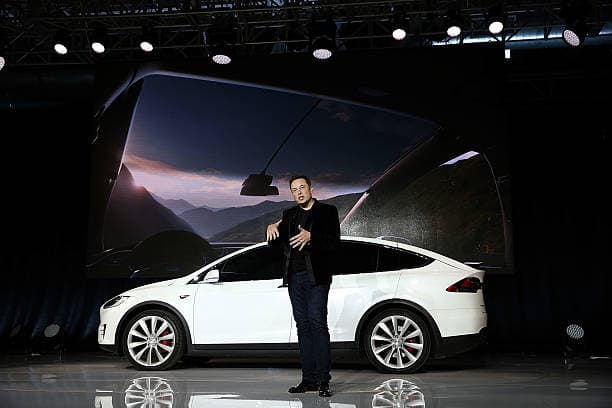
Tesla's growing investments in AI and robotics are reshaping investor perceptions of the company.
Executive Summary
Tesla's decision to increase capital spending to $25 billion marks one of the clearest signs yet that the company is evolving beyond its identity as an electric vehicle manufacturer. Massive investments in artificial intelligence, robotics, autonomous driving, semiconductor infrastructure, battery production, and supply chain development suggest Tesla is positioning itself as a long-term AI platform company. Investors increasingly view Tesla's future valuation through the lens of robotaxis, Optimus robots, and AI-powered recurring revenue streams rather than vehicle sales alone.
Key Takeaways
- ✓Tesla plans to invest approximately $25 billion in AI, robotics, batteries, and infrastructure.
- ✓The company is increasingly positioning itself as an AI and robotics leader rather than solely an automaker.
- ✓Cybercab and Optimus are central to Tesla's long-term growth strategy.
- ✓Full Self-Driving technology remains one of Tesla's most important future catalysts.
- ✓Recurring revenue from robotaxi and robotics services could reshape Tesla's business model.
- ✓Investors are increasingly valuing Tesla based on its AI potential rather than EV sales alone.
Tesla's $25B AI Push Signals a Future Beyond Electric Vehicles
For years, Tesla was primarily viewed as an electric vehicle manufacturer. Today, that narrative is rapidly changing.
The company's decision to increase capital expenditures to approximately $25 billion reflects a broader transformation that could redefine how investors value the business. Rather than focusing solely on vehicle production, Tesla is increasingly investing in artificial intelligence, robotics, semiconductor infrastructure, battery manufacturing, and autonomous mobility.
As a result, the investment case for Tesla AI stock is becoming less about electric vehicle deliveries and more about the company's ambition to become a global leader in AI-powered automation.
Why Tesla Is Spending $25 Billion
Large-scale capital spending typically signals a company's confidence in future growth opportunities.
Tesla's investment plan includes multiple strategic projects designed to strengthen both its manufacturing capabilities and its AI ecosystem.
Among the key investments are:
- A lithium refinery.
- Lithium iron phosphate battery production facilities.
- Optimus robot manufacturing capacity.
- AI computing infrastructure.
- Semiconductor supply chain development.
- Advanced autonomous vehicle platforms.
These projects are intended to support Tesla's long-term vision rather than simply expand vehicle production.
Tesla's Evolution From Automaker to AI Company
One of the most significant developments for investors is Tesla's changing identity.
Historically, revenue depended heavily on vehicle sales.
In the future, management envisions a business increasingly driven by:
- Robotaxi networks.
- Autonomous transportation services.
- Optimus robot deployments.
- AI software capabilities.
- Recurring subscription revenue.
- Robotics-as-a-service solutions.
This shift could fundamentally alter Tesla's business model and profitability profile.
The Importance of Full Self-Driving Technology
At the center of Tesla's AI strategy is Full Self-Driving (FSD).
CEO Elon Musk has repeatedly emphasized that advanced autonomous driving remains a crucial milestone before large-scale deployment of fully autonomous transportation networks.
The anticipated validation and rollout of FSD v15 is expected to be a major catalyst.
According to Tesla's roadmap, achieving highly reliable unsupervised driving capabilities would unlock significant opportunities in robotaxi services.
For investors, this represents one of the most important variables affecting Tesla's long-term valuation.
Cybercab: The Foundation of Tesla's Robotaxi Future
Tesla's dedicated autonomous vehicle platform, known as Cybercab, represents a major step toward creating recurring revenue streams.
Unlike traditional vehicle sales, robotaxi networks have the potential to generate revenue continuously throughout a vehicle's operating life.
Potential advantages include:
- Higher asset utilization.
- Lower transportation costs.
- Reduced driver-related expenses.
- Scalable mobility networks.
- Recurring platform revenue.
If successful, Cybercab could transform Tesla from a manufacturer into a transportation platform operator.
Optimus: Tesla's Most Ambitious AI Project?
While robotaxis receive significant attention, some analysts believe Optimus could become Tesla's most valuable product.
The humanoid robot project aims to automate repetitive and physically demanding tasks across industries.
Potential applications include:
- Manufacturing.
- Warehousing.
- Logistics.
- Retail operations.
- Healthcare support.
- Home assistance.
Tesla's long-term vision includes recurring revenue generated through robot-as-a-service business models.
Such a model could provide more predictable cash flows than cyclical vehicle sales.
Building the AI Supply Chain
Another important aspect of Tesla's strategy is vertical integration.
Rather than relying entirely on external suppliers, Tesla is investing heavily in securing critical resources and technologies.
Its plans include:
- Refining lithium.
- Producing battery components.
- Expanding semiconductor access.
- Developing manufacturing infrastructure.
The company's participation in semiconductor initiatives further reflects its desire to control key elements of future AI hardware requirements.
This strategy may help reduce supply chain risks while improving long-term cost efficiency.
Why Wall Street Is Watching Robotaxis and Robotics
Many analysts increasingly separate Tesla's current business from its future opportunities.
Vehicle sales remain important today, but investors are assigning growing value to emerging AI-driven businesses.
Some projections suggest that robotaxi and Optimus-related activities could account for a meaningful portion of Tesla's revenue within the next several years.
This helps explain why Tesla often trades differently from traditional automotive companies.
Investors are not simply evaluating current earnings—they are assessing the potential scale of future AI-powered ecosystems.
Market Implications for the AI Sector
Tesla's investment surge highlights a broader trend across global technology markets.
Leading companies are increasingly allocating capital toward:
- Artificial intelligence infrastructure.
- Advanced robotics.
- Automation systems.
- Semiconductor capabilities.
- Autonomous transportation.
The race to develop commercially viable AI solutions is accelerating, and Tesla intends to be among the companies shaping that future.
India Angle: Opportunities for India's Technology Ecosystem
Tesla's AI ambitions have relevance beyond the United States.
India's growing focus on:
- Artificial intelligence.
- Semiconductor manufacturing.
- Robotics innovation.
- Electric mobility.
- Advanced manufacturing.
creates potential opportunities for collaboration, investment, and technology development.
Indian firms involved in batteries, software, automation, and semiconductor ecosystems may benefit from broader industry trends that Tesla is helping accelerate.
Risks Investors Should Consider
Despite the excitement surrounding Tesla's AI strategy, execution risks remain significant.
Key challenges include:
- Regulatory approval for autonomous vehicles.
- Safety requirements.
- Competitive AI development.
- Robotics commercialization timelines.
- Capital intensity.
- Macroeconomic uncertainty.
Success depends not only on technological breakthroughs but also on widespread adoption and regulatory acceptance.
What Investors Should Watch Next
Several milestones will help determine whether Tesla can successfully transition into an AI and robotics powerhouse:
- FSD v15 validation and deployment.
- Cybercab commercialization progress.
- Optimus production scaling.
- Expansion of AI computing infrastructure.
- Semiconductor supply chain developments.
- Growth in recurring software and service revenue.
These indicators will provide important clues regarding Tesla's future growth trajectory.
Conclusion
Tesla's $25 billion investment plan represents more than an expansion of its manufacturing footprint. It signals a strategic transformation that could redefine the company's future.
While electric vehicles remain the foundation of Tesla's business today, management is increasingly focused on building an ecosystem centered on artificial intelligence, autonomous mobility, robotics, and recurring revenue services.
For investors evaluating Tesla AI stock, the key question is no longer how many vehicles Tesla can sell. Instead, it is whether the company can successfully become one of the world's leading AI and robotics platforms.
If Tesla executes on its vision, the company's next decade may be defined less by cars and more by algorithms, robots, and autonomous systems.
Vihaan
Senior AI and Innovation CorrespondentCredentials: MA in Economics, NISM Certified
Vihaan covers domestic indices, banking sector developments, and monetary policy news. He has over 8 years of corporate finance journalism experience.
