
Pokémon Go User Data Helped Train AI That Could Aid Military Drones
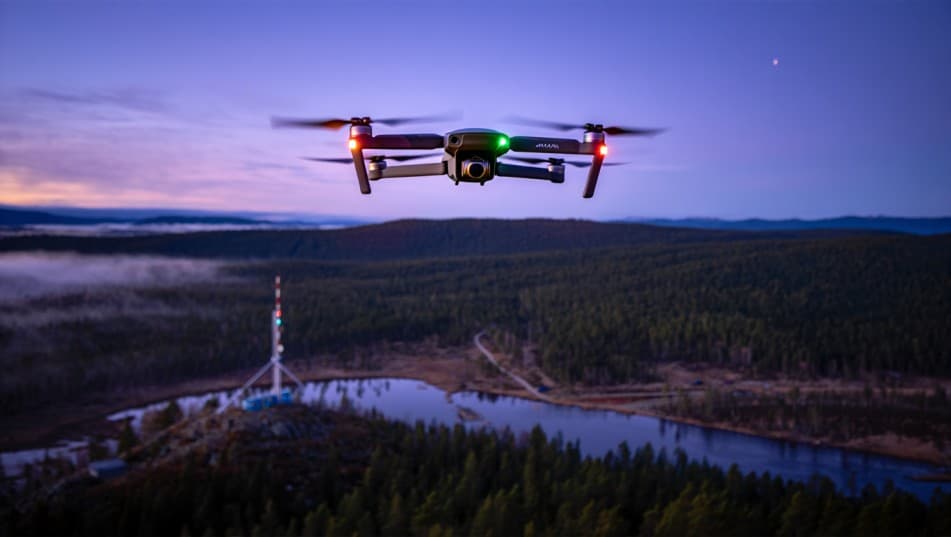
Location scans collected through Pokémon Go helped train AI models capable of interpreting real-world environments.
Executive Summary
Spatial data voluntarily submitted by Pokémon Go players has been used to train AI models developed by Niantic Spatial. The technology may eventually assist drones operating in GPS-denied environments, including military applications. While neither Niantic Spatial nor Vantor shared player scans directly, privacy advocates have raised concerns about civilian-generated data contributing to defense technologies.
Key Takeaways
- ✓Pokémon Go AR scans were used to train AI models developed by Niantic Spatial.
- ✓The technology may help drones navigate in GPS-denied environments.
- ✓Niantic Spatial partnered with drone software company Vantor in late 2025.
- ✓Both companies say player scans were not directly shared with Vantor.
- ✓Privacy advocates have raised concerns about civilian data contributing to defense technologies.
- ✓The story highlights the growing overlap between consumer data, AI development, and military innovation.
Pokémon Go User Data Helped Train AI That Could Aid Military Drones
Artificial intelligence models trained using location scans collected from Pokémon Go players could eventually support military drones navigating in areas where GPS signals are unavailable or compromised.
Pokémon Go, the augmented reality mobile game launched in 2016, encouraged players to explore real-world locations while capturing virtual creatures through their smartphone cameras. The game quickly became a global phenomenon and surpassed 800 million downloads within its first few years.
How Pokémon Go Collected Spatial Data
In 2021, developer Niantic introduced an optional AR scanning feature tied to PokéStops. Players who chose to participate could record and upload scans of real-world landmarks in exchange for in-game rewards.
The feature required users to opt in before contributing data. Over time, these scans helped create a large repository of real-world spatial information.
From Gaming Data to AI Training
Before selling its gaming division in 2025, Niantic used the accumulated scans to develop AI models capable of recognizing, mapping, and interpreting physical spaces.
According to reports, the historical scan data became part of the training process for foundation models developed by Niantic Spatial, a company spun off from Niantic to focus on spatial intelligence technologies.
Partnership Focused on GPS-Independent Navigation
In December, Niantic Spatial announced a partnership with Vantor, a company specializing in spatial awareness software for drones and autonomous systems.
The collaboration aims to enable drones and field systems to navigate effectively in environments where GPS signals are unavailable, jammed, spoofed, or otherwise unreliable.
The companies described GPS disruption as a growing challenge for both civilian and defense operations. Their technology seeks to provide alternative methods of localization and coordination when satellite navigation cannot be trusted.
Potential Military Applications
Vantor develops navigation and spatial intelligence software used across multiple industries, including defense.
Speaking in a December interview with Tectonic Defence, Vantor Chief Product Officer Peter Wilczynski emphasized the need for adaptable software systems capable of integrating quickly with new hardware in increasingly complex operational environments.
The partnership has fueled discussion about how technologies originally developed using consumer-generated data may ultimately contribute to military capabilities.
Companies Clarify Data Usage
Both Niantic Spatial and Vantor stated that Pokémon Go scans were not transferred directly to Vantor as part of their agreement.
However, the companies confirmed that user-contributed scans were used to train Niantic Spatial's AI foundation models.
A spokesperson for Niantic Spatial noted that all AR scans were submitted voluntarily by players who opted into the feature and were governed by the game's applicable terms of service and privacy policies at the time of collection.
Representatives from both organizations said the partnership remains in its early stages of development.
Privacy and Ethical Concerns
The revelation has prompted concerns among privacy advocates regarding the future use of consumer-generated data.
Tom Sulston, Head of Policy at Digital Rights Watch, argued that many users may not fully understand how information collected through seemingly harmless entertainment products could later contribute to technologies with military applications.
He suggested regulators should adopt stronger standards focused on user interests and reasonable expectations regarding how personal and behavioral data may be utilized.
Sulston also warned that many free digital services rely heavily on user-generated information as a core business asset.
Experts Say Similar Cases Already Exist
Researchers note that the use of civilian-generated location data in security and defense contexts is not unprecedented.
Dr. Rob Nicholls, a senior researcher associated with the University of Sydney's Centre for AI, Trust and Governance, pointed to previous incidents involving fitness-tracking platforms such as Strava, where publicly shared GPS information revealed the locations of sensitive military facilities.
According to Nicholls, military organizations around the world have increasingly restricted the use of GPS-enabled devices due to operational security concerns.
Defense Sector Growth
Vantor's involvement in defense technology continues to expand. In February, the company announced a contract with the US Army worth up to US$217 million for training-related software solutions.
Meanwhile, Niantic sold its video game division to Saudi Arabian-owned Scopely in 2025 as part of a US$3.5 billion transaction.
Outlook
The case highlights the growing intersection between consumer technology, artificial intelligence, and defense innovation.
While companies involved emphasize that player scans were collected voluntarily and used within established policies, the situation raises broader questions about transparency, consent, and the long-term uses of data generated through everyday digital experiences.
Vihaan
Technology CorrespondentCredentials: MA in Economics, NISM Certified
Vihaan covers domestic indices, banking sector developments, and monetary policy news. He has over 8 years of corporate finance journalism experience.
