
Nasdaq Crashes 4.18% in Worst Day of 2026 as AI Stocks Implode and Fed Hike Odds Surge
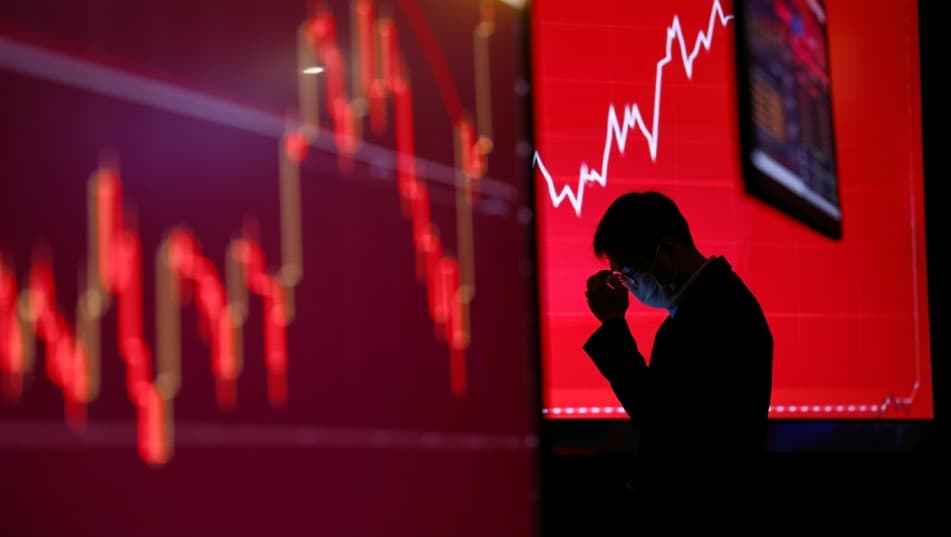
Nasdaq suffers worst day of 2026 on June 5 as $1.7 trillion erased from markets
Executive Summary
The Nasdaq Composite plunged 4.18% on June 5, 2026 — its worst session since April 2025 — erasing $1.7 trillion in market value as chip stocks led a broad AI selloff triggered by a blowout May jobs report that raised odds of Federal Reserve rate hikes.
Key Takeaways
- ✓Nasdaq plunged 4.18% on June 5 — worst day of 2026 — as AI and chip stocks bore the brunt of a broad selloff.
- ✓A blowout May jobs report (172,000 added, double the forecast) destroyed rate-cut narratives and pushed Fed hike odds above 65%.
- ✓$1.7 trillion in market value evaporated in a single session, ending the S&P 500's nine-week winning streak.
- ✓Bitcoin fell over 5% and broke below $60,000, with the VIX spiking 40% to a two-month high.
- ✓The selloff exposes deep valuation vulnerability in high-multiple AI stocks in a 'higher-for-longer' rate environment.
Nasdaq Suffers Worst Day of 2026 as $1.7 Trillion Vanishes in AI Bloodbath
Wall Street experienced its most violent single-day correction of 2026 on Friday, June 5, when a stronger-than-expected U.S. jobs report shattered rate-cut hopes and triggered a relentless selloff concentrated in the most crowded trade of the year: artificial intelligence stocks.
The Numbers
The Nasdaq Composite fell 4.18% to close at 25,709.43 — its worst one-day performance since the April 2025 tariff shock. The S&P 500 dropped 2.64% to 7,383.74, snapping a nine-week winning streak and posting its worst day since October. The Dow Jones Industrial Average shed 695 points (1.35%) to 50,866.78. In aggregate, approximately $1.7 trillion in market value was erased in a single session. Wall Street's fear gauge, the VIX, surged 40% to its highest level in two months.
The Catalyst: Jobs Report Demolishes Rate-Cut Bets
U.S. nonfarm payrolls rose by 172,000 in May — more than double the Wall Street consensus of 85,000 — while the unemployment rate held at 4.3%. Average hourly earnings rose 0.3% month-on-month and 3.4% year-on-year. Compounding the shock, March and April payrolls were revised 93,000 higher in aggregate, painting a picture of a labour market far more resilient than bears had hoped.
For a market that had spent weeks pricing in Fed rate cuts, the data was seismic. Rate futures rapidly repriced: implied odds of a Federal Reserve rate hike by December 2026 jumped from approximately 48% before the data to 67% immediately after, according to CME FedWatch.
Chip Stocks Led the Carnage
Semiconductors bore the brunt of the selling. The Philadelphia Semiconductor Index (SOX) dropped more than 6% on the day. Disappointment had been seeding in the sector since Wednesday evening, when Broadcom failed to raise its AI chip revenue outlook — a signal that the AI infrastructure spending wave may be moderating from its breakneck pace. By Friday, that initial concern had metastasised into full-blown sector liquidation.
Technology (XLK) as a sector declined more than 5%, with Big Tech, software, and data-centre names all in steep retreat.
Bitcoin and Gold Also Sold Off
The risk-off wave was not confined to equities. Bitcoin tumbled more than 5% on the day, dipping below $60,000 — its lowest level since October 2024 — and falling below its 200-day moving average for the first time since 2023. Brent crude fell roughly 2% to just above $93 per barrel. Gold also retreated. 10-year Treasury yields rose to 4.54%, an unusual divergence from falling oil, signalling that bond traders were squarely focused on inflation rather than growth risk.
What Analysts Said
"After the record run we've seen the last nine weeks, the dam just broke today," said Ryan Detrick, chief market strategist at Carson Group. Morgan Stanley Wealth Management's Ellen Zentner said rate cuts are "not on the near-term horizon" but argued the absence of inflationary wage signals should "quiet some chatter about a potential hike." Wells Fargo's Ohsung Kwon called the selloff "more driven by positioning than fundamentals."
Conclusion
The June 5 selloff represents a fundamental repricing of duration risk in a market saturated with high-multiple AI names. With the Fed now almost certainly on hold — and increasingly likely to hike — the key question is whether the technology and AI earnings machine is strong enough to support current valuations without the tailwind of cheap money.
Saanvi
Senior News CorrespondentCredentials: CFA Charterholder, MBA
Saanvi is a seasoned investment strategist and former portfolio analyst. She writes about defensive stock picks and long-term portfolio growth.
