
Iran War and Strait of Hormuz Closure Push Brent Crude Above $93, Threatening Global Stagflation
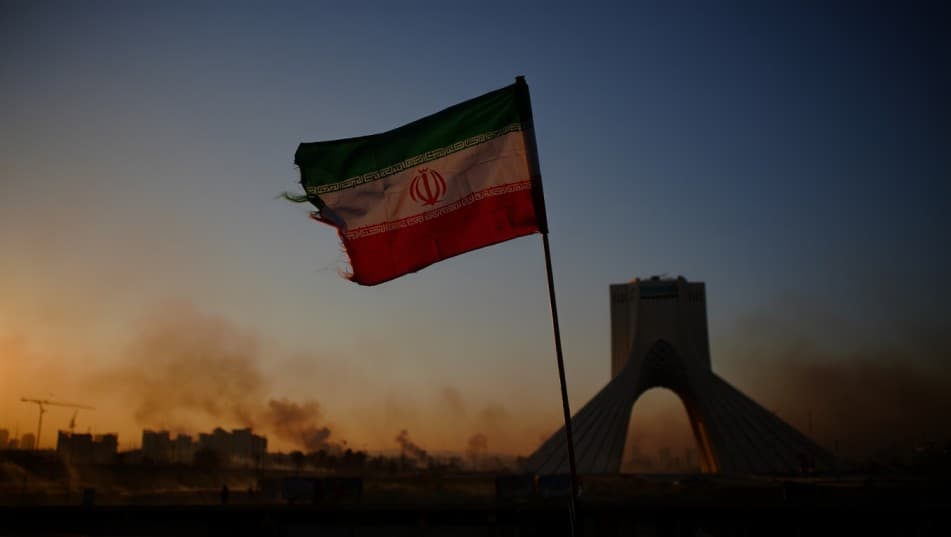
Brent crude trades above $93/barrel as the Iran war reshapes global energy markets
Executive Summary
The U.S.-Israel military campaign against Iran, launched on February 28, 2026, and the subsequent closure of the Strait of Hormuz — through which over 20% of global oil flows — has sent Brent crude above $93 per barrel, triggering inflation spikes across multiple economies and raising the spectre of 1970s-style stagflation.
Key Takeaways
- ✓The U.S.-Israel war on Iran, launched February 28, 2026, triggered the largest oil supply disruption in global energy market history according to the IEA.
- ✓Brent crude surged from ~$69 to above $93/barrel as Iran closed the Strait of Hormuz, blocking 20%+ of global oil flows.
- ✓Five major economies — the U.S., UK, India, Australia, and Canada — are all experiencing material inflation impacts from the oil shock.
- ✓The RBA, Bank of England, and RBI have all cited the Iran war as a primary driver of revised inflation outlooks.
- ✓Stagflation risk — rising prices coinciding with slowing growth — is now the central macro threat of 2026.
Iran War Reshapes Global Energy Markets: $93 Oil and the Stagflation Spectre
The 2026 Iran war — launched on February 28 when U.S. and Israeli forces struck Iranian military and nuclear targets, triggering retaliatory attacks on U.S. bases and Israeli territory — has produced the most significant oil supply disruption in the history of global energy markets, according to the International Energy Agency.
The Strait of Hormuz Factor
Iran's new Supreme Leader, Mojtaba Khamenei, responded to the military campaign by ordering the closure of the Strait of Hormuz — a narrow waterway through which over 20% of global oil supply flows daily, including shipments from Saudi Arabia, the UAE, Kuwait, and Iraq. Tanker traffic disruptions have forced Gulf producers to curtail output, removing a significant volume from global markets.
Brent crude, which traded around $69 per barrel before the war broke out in June 2025, has since surged to above $93 per barrel as of early June 2026 — just below the $100 threshold last crossed in the summer of 2022. Macquarie Group warned as recently as March that if the conflict extended into June, oil could spike to $200 per barrel.
Inflation Cascade Across Five Economies
United States: The Federal Reserve's January 2026 rate cut cycle has been frozen by oil-driven inflation. Dallas Fed researchers modelling a full Hormuz closure projected WTI peaking at $94/barrel. The May 2026 CPI is watched closely for second-round effects.
United Kingdom: The Bank of England held its base rate at 3.75% in April, citing the Iran conflict as a key reason. Governor Andrew Bailey stated the BoE would "tolerate temporarily above-target inflation" but warned that tolerance would weaken if second-round effects emerged. UK inflation is tracking well above the 2% target.
India: The Strait of Hormuz is the primary route for India's crude oil, LNG, and LPG imports. The RBI raised its FY27 CPI inflation forecast to 5.1% and cut GDP growth projections to 6.6%, directly citing higher energy prices. India's current account deficit faces significant upside risk.
Australia: The RBA raised rates to 4.35% in May 2026, with its May Monetary Policy Statement forecasting headline inflation peaking at 4.8% in Q2 2026 — 3.7 percentage points above baseline due to the Middle East conflict's energy price pass-through.
Canada: Canada is a net oil exporter, meaning elevated prices partially offset the economic pain from tariff-driven growth weakness. Economists expect rising oil revenues to support a Q2 2026 GDP rebound after a technical recession in Q4 2025/Q1 2026.
Conclusion
The Iran war has transformed a global economy that entered 2026 cautiously optimistic about disinflation into one grappling with supply-shock inflation and growth deceleration simultaneously. The resulting stagflation pressure — with central banks unable to cut rates without stoking inflation or hike without crushing growth — represents the defining macro challenge of 2026.
Priya
Senior News CorrespondentCredentials: CFA, NISM Equity Research Analyst
Priya is an equity research writer with a focus on fast-moving consumer goods (FMCG) and automobile sectors in India.
