
How the Bank of England Sets Interest Rates: A Plain English Guide
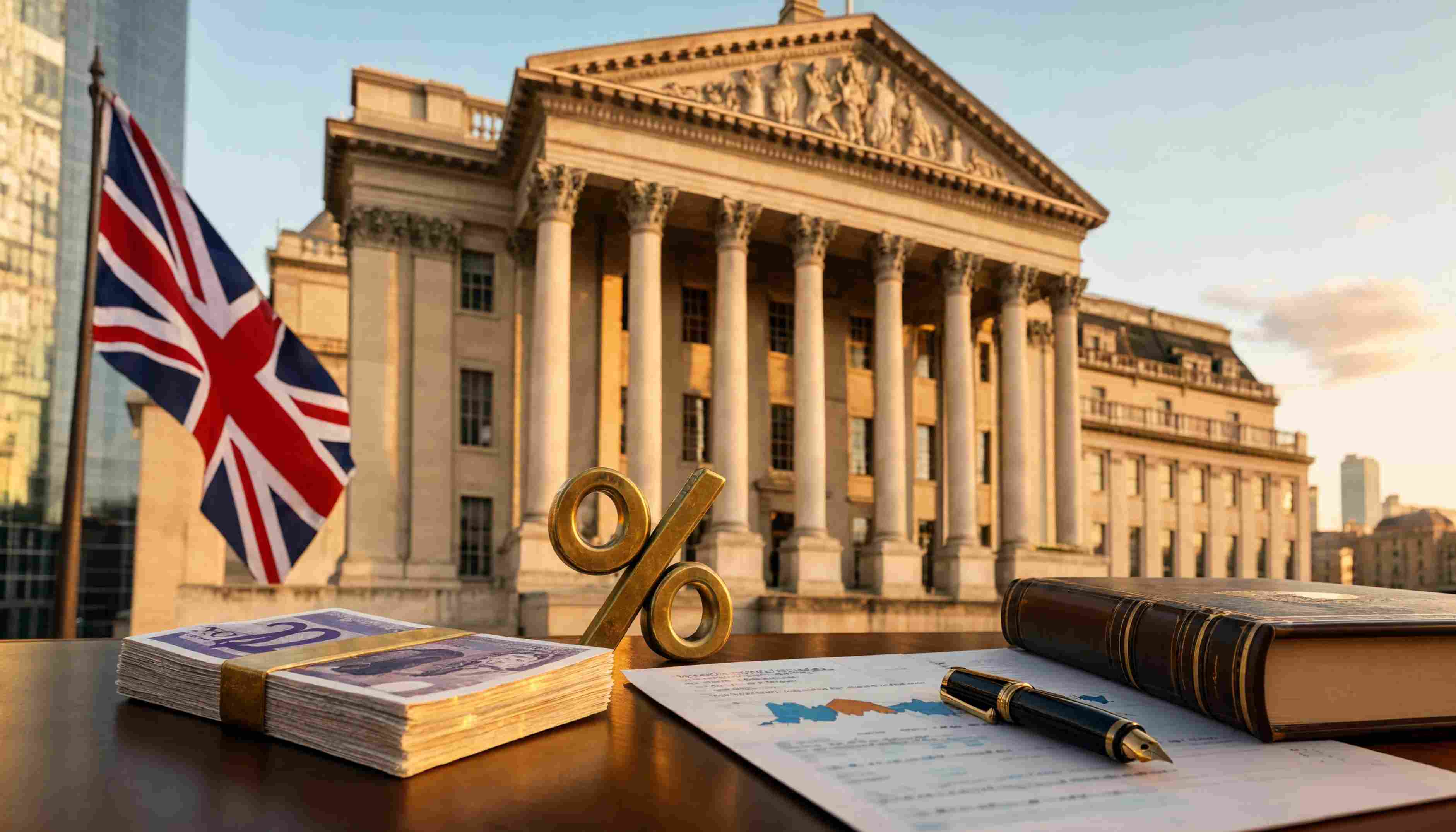
The Bank of England uses interest rates as a key tool to manage inflation and support economic stability.
Executive Summary
The Bank of England plays a central role in managing the UK's economy by setting interest rates. These rates influence borrowing costs, savings returns, business investment, and overall economic activity. Through its Monetary Policy Committee, the Bank reviews economic data, inflation trends, employment figures, and global developments before deciding whether to raise, lower, or maintain the base rate. This guide explains the process in simple terms, helping readers understand how interest rate decisions affect households, businesses, and financial markets.
Key Takeaways
- ✓The Bank of England uses interest rates primarily to control inflation.
- ✓The Monetary Policy Committee votes on whether rates should rise, fall, or remain unchanged.
- ✓Interest rate changes affect mortgages, savings, loans, and business investment.
- ✓Economic data such as inflation, employment, and wage growth influence policy decisions.
- ✓Rate changes can take months or even years to fully affect the wider economy.
How the Bank of England Sets Interest Rates: A Plain English Guide
The Bank of England interest rates framework is one of the most important tools used to manage the UK economy. While discussions about central banking can often sound technical, the basic idea is straightforward: the Bank of England adjusts interest rates to help keep inflation under control and support economic stability.
For millions of people, these decisions affect mortgage payments, savings returns, credit card costs, business loans, and even employment opportunities. Understanding how the process works can help consumers and investors make better financial decisions.
What Is the Bank of England?
The Bank of England is the United Kingdom's central bank. Established in 1694, it is responsible for maintaining monetary and financial stability. One of its primary responsibilities is controlling inflation by adjusting the country's official interest rate, commonly known as the Bank Rate.
The Bank operates independently from the government when making monetary policy decisions, although it works within objectives set by Parliament.
What Is an Interest Rate?
An interest rate is the cost of borrowing money or the reward for saving it.
For example:
- Borrowers pay interest on mortgages and loans.
- Savers earn interest on deposits.
- Businesses pay interest when financing investments.
When interest rates rise, borrowing becomes more expensive and saving becomes more attractive. When rates fall, borrowing generally becomes cheaper, encouraging spending and investment.
Why Does the Bank of England Change Interest Rates?
The main objective behind changing interest rates is controlling inflation.
Inflation measures how quickly prices increase over time. The Bank of England aims to keep inflation close to a target of 2%.
When inflation rises significantly above target:
- The Bank may increase rates.
- Higher borrowing costs reduce spending.
- Demand slows across the economy.
- Price pressures gradually ease.
When inflation falls too low or economic growth weakens:
- The Bank may cut rates.
- Cheaper borrowing encourages spending.
- Businesses may invest more.
- Economic activity can strengthen.
Who Decides the Interest Rate?
The Monetary Policy Committee (MPC)
The Monetary Policy Committee is responsible for setting UK interest rates.
The committee consists of nine members who meet regularly to review economic conditions.
Members include:
| Position | Role |
|---|---|
| Governor | Leads the Bank of England |
| Deputy Governors | Provide expertise in monetary policy and financial stability |
| Chief Economist | Offers economic analysis |
| External Members | Independent specialists appointed to provide diverse perspectives |
Each member votes on whether rates should increase, decrease, or remain unchanged.
The majority decision becomes official policy.
How Does the MPC Make Its Decision?
Economic Data Review
Before voting, policymakers examine a wide range of information.
Key indicators include:
- Inflation data
- Employment figures
- Wage growth
- Consumer spending
- Business investment
- Housing market activity
- Global economic conditions
- Exchange rate movements
The committee attempts to predict where inflation and economic growth are heading rather than focusing solely on current conditions.
Bank of England Interest Rates and Inflation
Inflation is often the biggest factor influencing rate decisions.
Suppose inflation rises sharply because consumers are spending heavily and businesses struggle to meet demand. In that case, prices may increase rapidly.
The Bank may respond by raising interest rates. Higher borrowing costs reduce spending power and cool economic demand.
Conversely, if inflation falls significantly below target, policymakers may lower rates to encourage more economic activity.
How Interest Rate Changes Affect Households
Mortgages
Mortgage holders are often among the first groups affected.
Variable-rate and tracker mortgages typically move in line with changes to the Bank Rate.
When rates rise:
- Monthly mortgage payments may increase.
- Household budgets can come under pressure.
- Housing demand may weaken.
When rates fall:
- Borrowing costs generally decline.
- Mortgage affordability improves.
- Housing activity may increase.
Savings Accounts
Savers usually benefit from higher rates.
Banks often increase savings account returns when official rates rise. However, the amount passed on to customers can vary between institutions.
Credit Cards and Personal Loans
Interest rate increases can raise borrowing costs for consumers carrying debt.
This often encourages households to reduce discretionary spending.
Impact on Businesses
Businesses closely monitor Bank of England interest rates because borrowing costs directly influence investment decisions.
Higher rates may:
- Increase financing expenses.
- Delay expansion projects.
- Reduce hiring activity.
- Lower demand from consumers.
Lower rates may:
- Encourage investment.
- Support growth initiatives.
- Improve access to credit.
- Increase economic activity.
Impact on Financial Markets
Interest rate decisions often trigger immediate reactions across financial markets.
Investors assess:
- Future economic growth.
- Corporate earnings prospects.
- Currency valuations.
- Government bond yields.
A rate increase may strengthen the British pound because higher returns can attract international investors. However, market reactions depend heavily on expectations and broader economic conditions.
Why the Bank Cannot Control Everything
Although interest rates are powerful, they are not a perfect solution.
Some inflationary pressures originate outside the UK's control.
Examples include:
- Energy price shocks.
- Supply chain disruptions.
- Geopolitical conflicts.
- Global commodity shortages.
In such situations, rate changes may take longer to influence inflation outcomes.
How Long Do Rate Changes Take to Work?
Monetary policy affects the economy gradually.
Economists often estimate that interest rate changes can take anywhere from several months to two years to have their full impact.
Because of this delay, policymakers focus heavily on forecasts and future risks rather than reacting only to current economic conditions.
Expert Analysis: Balancing Inflation and Growth
One of the greatest challenges facing central bankers is balancing inflation control with economic growth.
Raising rates too aggressively can slow economic activity and increase unemployment risks. Keeping rates too low for too long can allow inflation to become entrenched.
The Monetary Policy Committee must therefore weigh competing priorities and make decisions based on incomplete information about future economic developments.
This balancing act explains why interest rate decisions often generate significant debate among economists, investors, businesses, and policymakers.
What Consumers Should Watch
Individuals interested in future rate movements should monitor:
- Inflation reports.
- Employment statistics.
- Wage growth trends.
- Economic growth figures.
- MPC meeting announcements.
These indicators frequently provide clues about the direction of future policy decisions.
Conclusion
Understanding how the Bank of England sets interest rates does not require an economics degree. The process centers on a simple objective: maintaining stable prices while supporting sustainable economic growth.
Through the Monetary Policy Committee, policymakers analyze economic conditions, inflation pressures, employment trends, and financial market developments before deciding whether rates should rise, fall, or remain unchanged.
The effects of these decisions extend throughout the economy, influencing mortgages, savings, business investment, consumer spending, and financial markets. As economic conditions evolve, interest rate decisions will continue to play a critical role in shaping the UK's financial future.
Riya
Senior News CorrespondentCredentials: MBA, NISM Investment Advisor
Riya covers insurance tech, digital banking platforms, and retail broking innovations. She holds a deep focus on financial literacy.
